
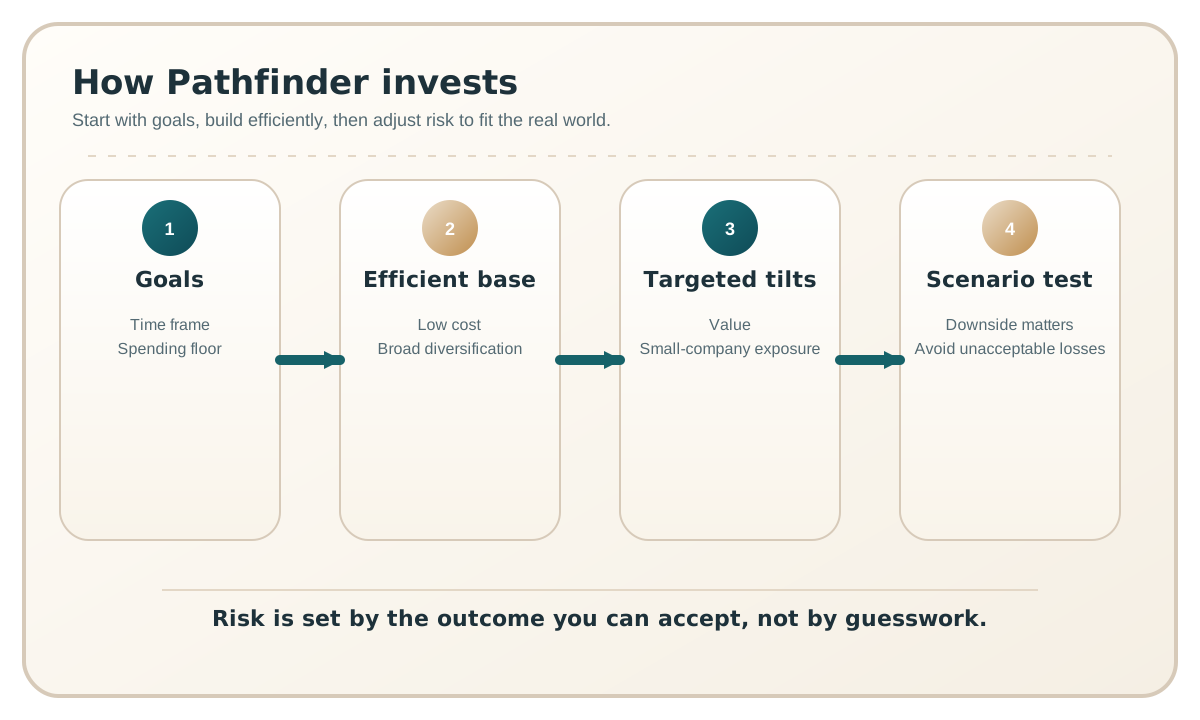
If investing feels abstract, here is the short version: Pathfinder builds portfolios to help you reach your goals without accepting outcomes you would later regret.
The short version
- Use low-cost indexing as the foundation.
- Add value and small-company exposure only when the evidence justifies it.
- Set stock and bond mix by looking at goals, time frame, downside tolerance, and current valuations.
- Avoid portfolio mixes that could force unacceptable spending cuts or other bad outcomes.
I spend a lot of time imagining what could go wrong. That habit is useful when investing, because portfolios should be designed to pursue opportunity without exposing you to unacceptable damage from the wrong sequence of events.
For readers who want the technical explanation, the evolution of investment strategy helps show why we do it this way.
How investment strategy evolved
Stock picking
Historically, wealthy patrons could pick businesses they knew personally and sometimes exert real influence over them. Once investing became securitized and global, that advantage mostly disappeared. Today most investors have little control and even less information.
That makes successful stock picking extraordinarily difficult. You have to identify businesses the market is undervaluing, and then wait for the market to agree with you. That can work in isolated cases, but it is not a dependable default strategy.
Market timing
Market timing, sometimes repackaged as tactical asset allocation, tries to improve returns by moving in and out of markets based on momentum or mean reversion.
Momentum can help until a sudden dislocation reverses the move. Mean reversion can also be real, but markets can remain mispriced for years. A strategy that depends on being right about timing has to survive being wrong for a long time.
Indexing
Indexing accepts that most investors should not try to outguess the market. Instead, it aims to capture the parts of stock returns that are most reliable over time: dividend yield and real earnings growth. Short-term bonds and regular rebalancing are then used to keep volatility inside a range that is more manageable.
That is the core of the portfolio: broad, low-cost exposure, with risk controlled deliberately rather than by guesswork.
Enhanced indexing
Research has also shown that two additional risk exposures have historically been rewarded over long periods: value and size.
Value companies often trade at lower valuations because they are riskier or less fashionable. Small companies have more room to grow, but they also have less room for error. Enhanced indexing tilts the portfolio toward those areas when appropriate, while still keeping the structure anchored in the broader market.
Scenario-based risk management
Traditional asset allocation often relies on time horizon and tolerance for volatility alone. That is incomplete. We also look at downside tolerance and at what current valuations suggest about the returns you are likely to earn going forward.
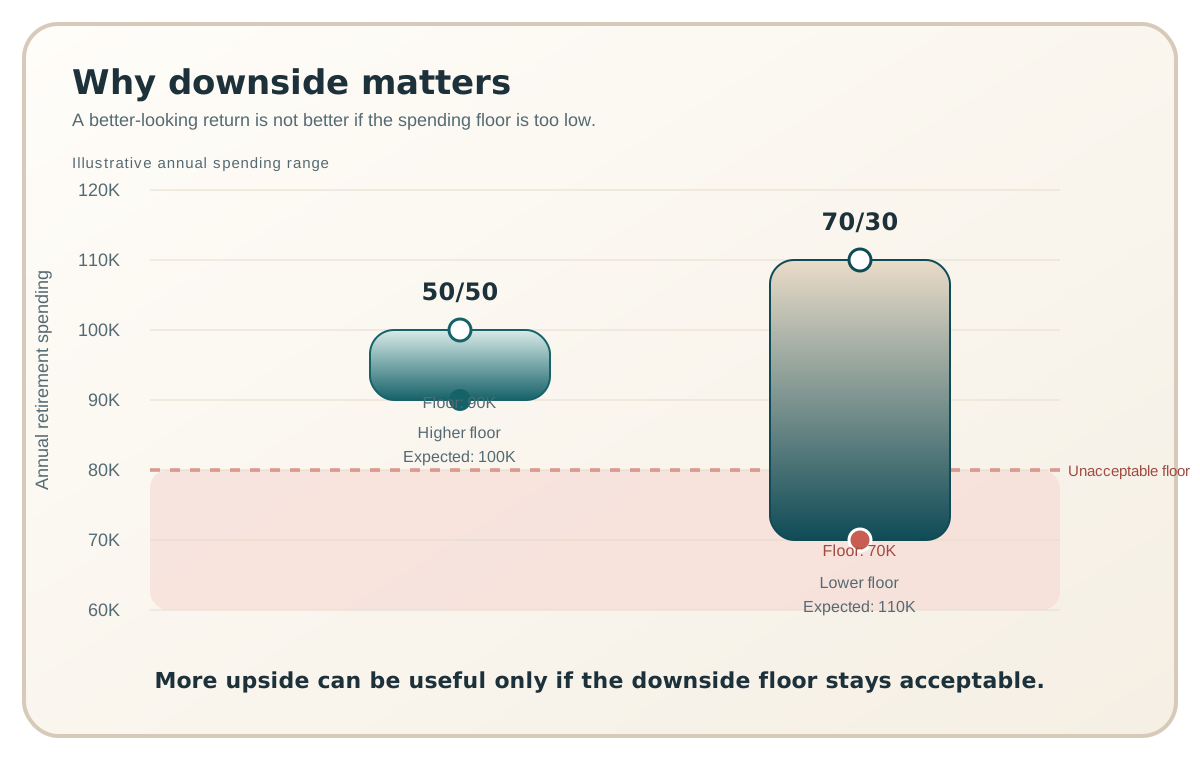
For example, a 50/50 portfolio might support a lower but more stable retirement spending level, while a 70/30 portfolio might offer more upside but also a worse outcome after a bad sequence of returns. If the downside on the more aggressive portfolio would be unacceptable, it should not be the default choice.
Current market valuations matter for the same reason. When valuations are stretched, expected future returns are lower and the cost of taking equity risk is higher. When valuations are attractive, it can make sense to accept more risk. The point is not to predict the next move. The point is to choose a portfolio that keeps the tradeoffs inside the boundaries that matter to you.
Bottom line: scenario-based risk management lets us balance return potential against unacceptable outcomes instead of pretending volatility is the only risk that matters.